

ProCat Solutions
Six minutes to erase an election rally: what hit the Nasdaq on Thursday?
The Nasdaq fell 5% and the chip index 10%. A Democratic Congress, a Texas data centre freeze and weak Qualcomm numbers landed on AI stocks at once.

It took six minutes after Thursday’s opening bell for the Nasdaq Composite to wipe out its entire post-election gain. By the afternoon the tech-heavy index was down more than 5%, the S&P 500 between 3.4% and 3.9%, the Dow 2–3%. The Philadelphia Semiconductor Index lost 10–11% in a single session. Wall Street’s fear gauge, the VIX, jumped 58% to above 26.
The figures are intraday; the market was still open when this was written.

Who got hit
Memory makers and chip designers took the worst of it. Sandisk fell 17–20% during the day, AMD 13–16%, Micron 12–16%. Qualcomm lost about 10%, Arm more than 9%, Nvidia 7–9%. Intel and Broadcom got away with 6–8%.
No single piece of bad news started it. Investors sold the whole chain at once, from chips and memory to the contractors who build data centres. According to Reuters, the slide put the Nasdaq on the edge of a correction, more than 10% below its peak.
Two days after the vote
On Tuesday the Democrats won both chambers of Congress. NBC projects 258 House seats, their best result since 1993, and at least 51 in the Senate. Stocks rose on Wednesday as the uncertainty lifted. Data centre builders did not join in: cooling-equipment maker Modine fell 24%, Sterling Infrastructure 19%, Comfort Systems USA 16%.
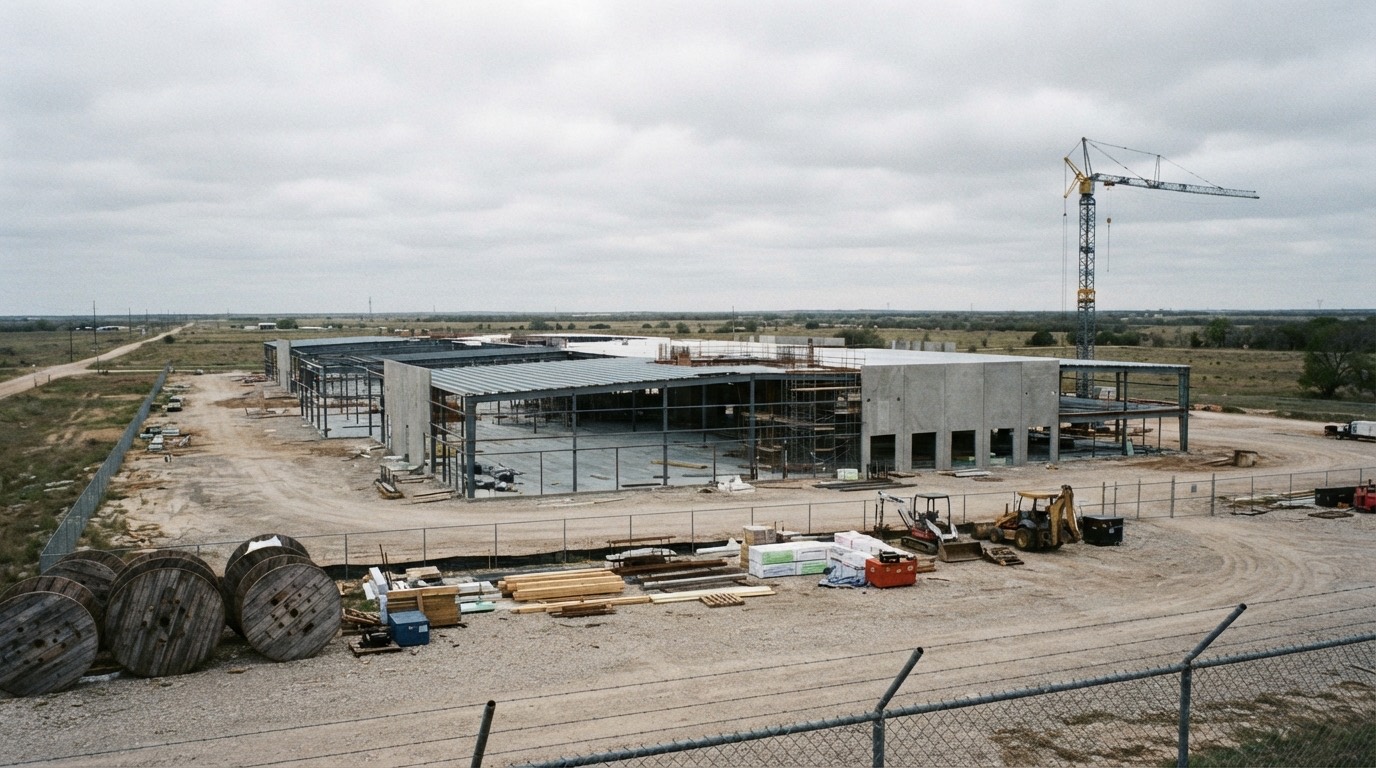
The key is Texas. The state is one of the biggest targets for planned US data centre capacity, and Democrat Gina Hinojosa won the governor’s race against Greg Abbott with 52.8% of the vote. On the campaign trail she promised to keep new data centre approvals on hold until the legislature meets in January and writes rules on their water and power use.
The freeze was not her idea. In August Abbott himself ordered audits of new data centre projects and halted new grid approvals, and in September he paused environmental permits too. The market is now betting that what began as temporary will last.
The Qualcomm numbers
Qualcomm’s report on Wednesday evening made things worse. Revenue from handset chips fell 26% to $5.14bn in the quarter to September, and total revenue dropped 8% to roughly $10.3bn. The chief financial officer said revenue from Apple could halve in the December quarter as iPhones move to Apple’s own modems.
The cost side is less comfortable. Qualcomm says wafers, packaging and memory are getting more expensive, and its own price rises will not reach margins until the second half of 2027. Memory is expensive because AI servers are taking the production capacity. The AI build-out is making phones dearer to make.
Who pays the AI bill
Thursday’s fall is part of a longer slide. The Nasdaq lost more than $2.5tn in market value in October, after Meta, Alphabet and Amazon raised their AI infrastructure budgets again. What unsettled investors was the gap between what is being spent and what is coming back, Reuters reported, especially as higher borrowing costs make debt-funded building more expensive. The US 10-year Treasury yield sits around 4.8%, and oil is above $90 a barrel.
Three outcomes are on the table. A technical correction: the market calms down within weeks and the investment continues. A lasting repricing: growth continues, but investors pay less for chipmakers. Or an AI infrastructure slowdown: fewer data centres get built, and chipmakers’ revenue shows it. The next markers are Friday’s US jobs report and Nvidia’s quarterly results, due in mid-November.
What it means for software builders
Demand from companies using AI does not fall because GPU makers’ shares do. The market is repricing the future profits of the makers and the builders, while use of the models keeps growing. For SaaS developers, a slower data centre boom could eventually mean cheaper compute, but nothing guarantees that in the short run, and memory prices are rising right now.
One thing was clear on Thursday: the market no longer pays a premium simply because a company is tied to AI. It wants proof of returns, and Nvidia’s November report will be the first test.
Sources
- Seeking Alpha: Wall Street’s tech selloff intensifies as Nasdaq drops more than 5%
- Yahoo Finance: Stock market today, November 5 (live coverage)
- Euronext / Reuters: Chip selloff drags global stocks lower on AI spending concerns
- TechCentral / Reuters: Nasdaq heads for correction as AI jitters wipe out election rally
- Invezz: Micron, SanDisk, SK Hynix plunge up to 20%
- Yahoo Finance: Qualcomm, Micron, Sandisk, and AMD stocks sink
- The Motley Fool: Qualcomm’s phone chip sales drop 26%
- 24/7 Wall St.: Qualcomm says December won’t be its biggest quarter anymore as Apple walks away
- Investing.com / Reuters: Nasdaq faces $2 trillion wipeout in October as AI spending fears deepen
- NBC News: Democrats win control of Congress
- The Motley Fool: Data center stocks just plunged after the midterms
- Texas Tribune: Under Hinojosa, Texas data center approvals could stay paused
- CNBC: Texas Gov. Abbott orders data center permit halt
- Texas Tribune: New Texas data center projects frozen until state audits them
- CNN: America got the anti-data-center wave it voted for